When you are customizing a denim coat, utility vest, or festival jacket, choosing the right patches is only half the fun. You also have to decide how to attach them.
One of the most common questions I get is whether to choose an iron-on backing or stick with standard, sew-on backing. While both options have their place, there are a few important details you should know before placing your order.
Ready to start your next DIY project?
Browse the Concert-Inspired Embroidered Patches Collection to find iconic symbols, planetary graphics, and tour designs for your custom jacket.
Concert-Inspired Embroidered Patches CollectionMy Honest Take: Why Sewing Is Preferred
If you ask me directly, sewing will always be my top recommendation for custom stage wear and festival jackets.
When I produce patches without heat-seal adhesive, I can guarantee the highest raw quality of the patch itself. The fabric backing stays soft and flexible, which makes it much easier for your needle to glide through when stitching it down by hand or machine.
More importantly, sewing gives you complete structural security. A stitched seam holds up against constant friction, heavy backpack straps, and washing machine cycles without ever shifting.
How Iron-On Backing Works
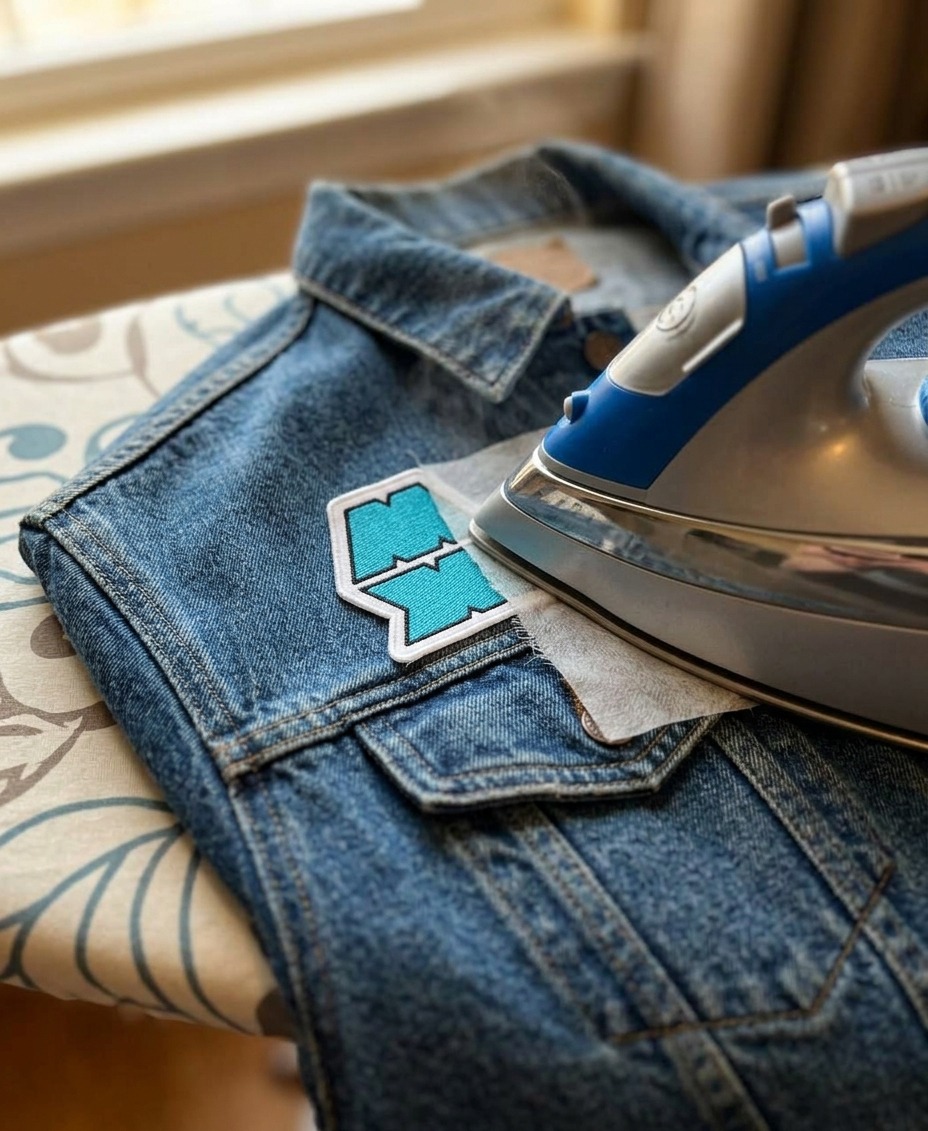
Iron-on backing is a heat-activated adhesive layer applied to the back of the patch. It is designed to melt under high heat and bond directly into the fibers of your garment.
It is incredibly popular for a reason:
- Speed: You can secure a patch in less than two minutes.
- Convenience: No needles, thread, or sewing skills required.
- Clean Look: There are no visible stitches running along the embroidered border.
While I have not had cases of my iron-on patches peeling or falling off, the strength of the bond depends heavily on the application process.
The Risk Factor: Heat and Application
The main downside to iron-on backing is that the success of the bond relies entirely on how the patch is applied at home.
If your iron is not hot enough, or if you do not press down firmly for the full duration, the glue will not fully penetrate the fabric. Synthetic materials, heavily treated denim, or thick canvas can also make heat transfer trickier than standard cotton.
Common Iron-On Mistakes to Avoid
- Using steam (always turn the steam setting off).
- Not heating the fabric beforehand.
- Ironing directly on the embroidery without a press cloth.
- Moving the iron around instead of pressing down with firm, stationary pressure.
If the adhesive fails to activate properly, the patch will not feel nearly as secure as a sewn piece.
Amanda's Verdict: The Best of Both Worlds
If you want a quick fix for a single event or a festival weekend, an iron-on patch is fast and convenient.
However, if you are building a heavy-duty concert jacket that you plan to wear for years, sewing is the gold standard.
Pro Tip: You can always order iron-on patches for the easy initial setup, and then add a few hidden tack stitches around the border corners for permanent peace of mind.
Find Your Next Custom Piece Today
Whether you prefer the speed of heat-seal adhesive or the traditional durability of needle and thread, all of my concert-inspired designs are crafted with crisp, high-density stitching made to last.